
Introduction
During the first six centuries of Christianity, church music played a central role in worship. It was not secular and carried a theological message. The music was monophonic, consisting of a single melodic line, and it did not use instruments. The rhythm followed the text, and music was transmitted mainly by oral tradition. Initially, it appeared in small communities and later in larger liturgical ceremonies.
Although religious church music, in the East and the West share common roots, they developed along different paths. These paths later influenced the development of Music History!
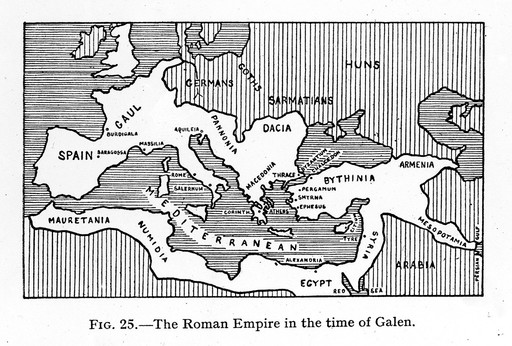
Common Features of East and West
- Music in this time period is monophonic.
- The rhythm of the musical form in this period have free rhythm, closely tied to the text (the hymn).
- Because it was mainly secular music, performed in the churches or in ceremonies, the use of instruments was not allowed.
- The music was transmitted orally. In this period no music notation wasa fully developed to write down the hymns or chants.
- Therefore, the main porpuse of this kind of music was to inform and worship, not for entairnment.
Musical Texture
Texture is the element of music that describes how many melodic lines are used and how they relate to each other. A monophonic texture means that there is only a single melody, with no harmony.
The Eastern Tradition
In the Greek- speaking and Syriac regions, music was expressed mainly through psalmody. The primary languages were Greek and Syriac.
During the 1st and 2nd centuries, simple forms of psalmody began to appear in early Christian communities, along with hymns of didactic character. In the 3rd century, antiphonal psalmody developed. In the 4th century, antiphonal phsalmody became more common, and early hymnody began to develop. During this time, Gregory of Nyssa contributed to theological and aestetic ideas that influenced early Christian musical thought. In the 4th and 5th centuries, the spread of antiphonal psalmody and early hymnody continued, with Saint Ambrose playing a key in organizing Latin hymnody. Catechetical hymnody developed during this period and consisted of instructional hymns that conveyed theological ideas. Finally, in the 5th and 6th centuries, Saint Ephrem the Syrian laid the foundations of Syriac hymnography, and Saint Romanos the Melodist created the first kontakions.
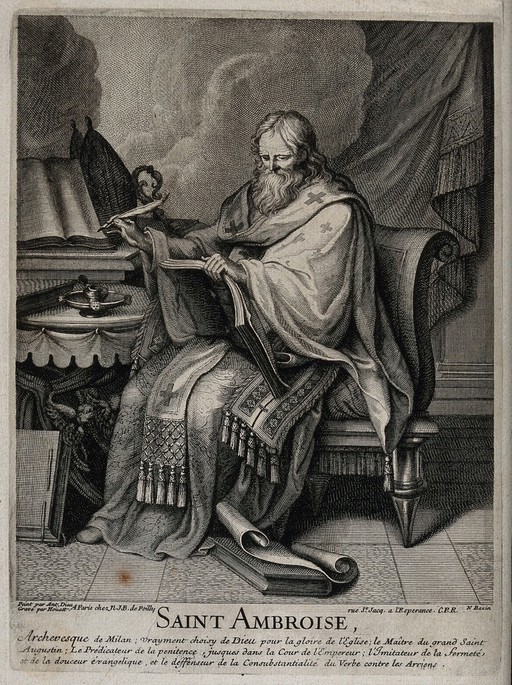
Source: Saint Ambrose. Line engraving by Houat after A. Dieu. – Wellcome Collection, United Kingdom – CC BY.
Forms of Psalmody
Direct Psalmody refers to the practice in which only one cantor sings the entire psalm.
Repsonsorial Psalmody is performed like a musical dialogue between the cantor and the congregation.
Antiphonal psalmody is characterised by the alternating singing of the psalm by two choirs.
Hymnody
Early hymnody
Catechetical hymnody
The Western Tradition
In Latin-speaking regions, church music remained strictly monophonic, based on psalmody and early hymnody. A notable figure of this period was Saint Ambrose of Milan, whose organisation of Latin hymnody played a crucial role in the formation of Gregorian chant. The same forms of psalmody and hymnody found in the Eastern tradition also developed in the West; however, the main difference is that there were fewer influences from Hebrew psalmody and ancient Greek music.
Historical Significance
The development of music during the first six centuries laid the foundations for Byzantine music in the East and Gregorian chant in the West. In this way, the musical landscape of medieval Europe was formed.
Want to keep it for review or classroom use? You can download the full PDF with the Quiz Worksheet for this chapter, ready to print or use digitally.
Additionally, you can support me via Buy Me a Coffee and make a small donation, helping me continue creating educational content and worksheets for future chapters.
In the next chapter, we will explore how church music evolved from the 6th to the 8th century and the emergence of early organum in the West.