
Understanding Time Signatures and Measures in Music
The time signatures and measures in music are essential for organizing rhythm. They define how beats are grouped and how music flows. In this post, we’ll break down pulse, tempo, measures, and time signatures – everything you need to read and play music with more confidence.
Pulse: The Heartbeat of Music
Pulse is the steady underlying rhythm that gives music its sense of motion. This rhythmic foundation creates the sense of movement that keeps music flowing through time. It’s what we instinctively tap our foot to or feel inside as we listen.
The sense of pulse gives music its structure and movement. In any piece of music, a specific note value is selected as the pulse. The pulse lets listeners naturally feel the rhythm, regardless of musical training. It is how we experience the music. However, the pulse doesn’t always align exactly with the individual beats of a measure.
Tempo: How Fast or Slow?
Tempo comes from the Latin word tempus, meaning “time.” It refers to the speed of the pulse, moves through time and determines how fast or slow the beats are counted. This plays a crucial role in shaping the overall energy and mood of the music.
How Music Tempo is Measured?
- Beats Per Minute (BPM) – This is a numerical value. A number showing how many beats occur in one minute. For example, if a piece has a tempo of 100 BPM it means 100 beats fit within one minute. The higher the BPM the faster the music feels.
60 BPM = Slow and steady (like a resting heartbeat)
120 BPM = Moderate (common in pop and rock music)
180 BPM = Very fast (often found in energetic dance or metal music)
Different genres often follow typical tempo ranges:
Dance, EDM, & Metal → 140+ BPM (fast, driving, powerful)
Ballads & Classical Adagios → 40-70 BPM (slow, emotional)
Pop & Rock Songs → 100-140 BPM (moderate, energetic)
- Italian Tempo Terms – Traditional words used in sheet music:
Largo (very slow)
Andante (moderate, like a natural walking pace)
Allegro (fast and lively)
Presto (very fast)
Measures and Bar Lines: Organizing Beats
Measures, also known as bars, group beats into organized segments. These help musicians follow the rhythm and keep time. Measures are separated by a vertical line called “bar line”, which visually divide the staff.
Single Bar Line: A single vertical line that divides the staff into measures (bars). Separates one measure from the next.

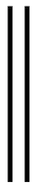
Double Bar Line: Two vertical lines places closely together. Used to indicate a change in a section, key or time signature.
Final Bar Line: Marks the end of a piece.

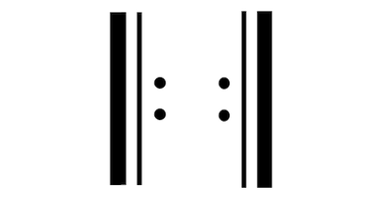
Repeat Sign: Signal to repeat a section of music
Although some musical traditions, such as ancient Greek music and certain African styles, do not rely on measures, in Western music they’re fundamental for structure and rhythm.
Time Signatures: Defining the Beat
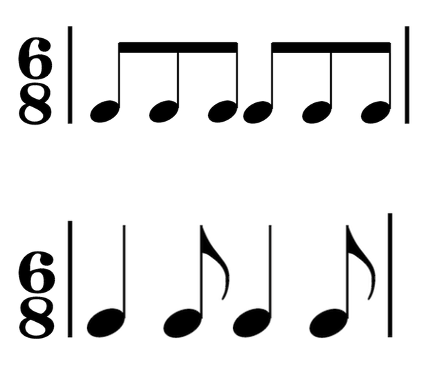
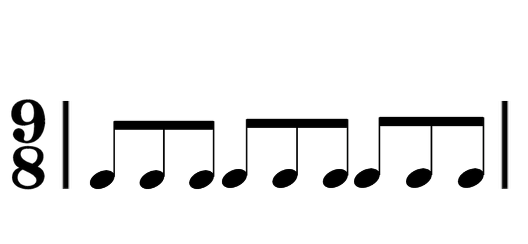
The time signature tells us how many beats are in each measure and which note value represents one beat. It consists of two numbers:
The top number indicates how many beats are in each measure, while the bottom number shows what type of note that gets one beat.

We count 1-2-3-4.

We count: 1-2-3
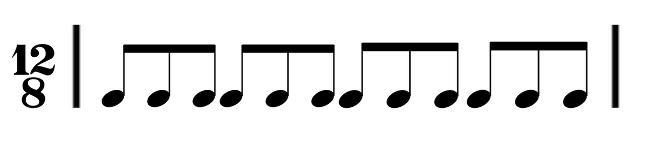
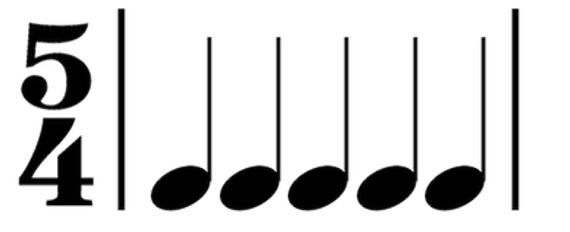
One not so common time signature
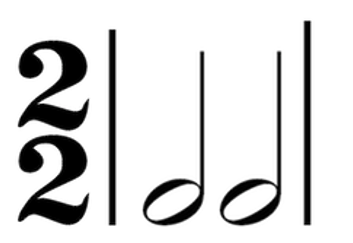
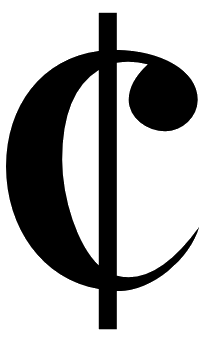
This is known as “Alla Breve” or “Cut Time”. The top number indicates that there are 2 beats per measure, each half note.
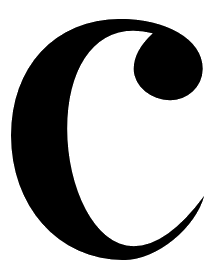
“C” is known as “Common Time”. It’s a 4/4 that often written as “C”.
Why It Matters
Understanding time signature and measures gives music its form. These elements shape the rhythm, guide the beat, and help players and listeners connect with the music.
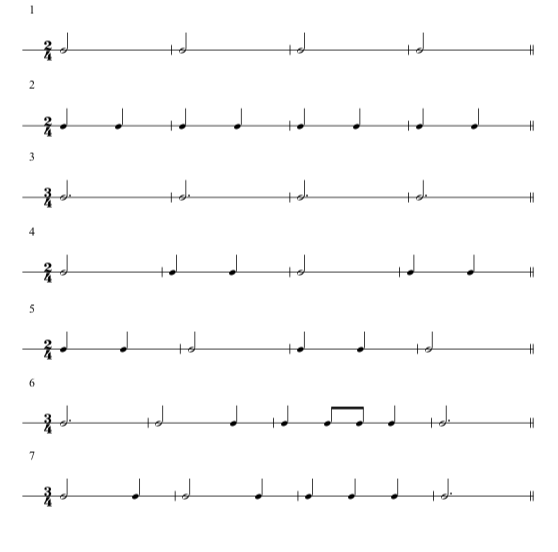
Want to learn more? Download the PDF version with bonus worksheets – great for beginners! Here is a Rhythmic Solfège to understand the basic time values!

Thank you so much for supporting my work! If you enjoyed what you saw, feel free to check out more of my creations in my Etsy shop or support me with a coffee via Buy Me a Coffee. Every little bit helps and means the world to me!
Your support allows me to keep doing what I love, and I’m so grateful for each and every one of you. Stay tuned for more exciting updates!