
Tuplets occur when rhythms divide the beat in an unexpected way. Using a triple division in a simple meter or a duple division in a compound meter. These rhythmic groupings create variations that fall outside the normal subdivisions of the time signature.
Tuplets are groups of notes that do not naturally fit within the standard rhythmic structure of a measure. They are most commonly used to create a “different” division of the beat.
A tuplet is formed when a certain number of notes are played evenly within the duration normally occupied by a different number of the same note values. A common example is the triplet: Three eighth notes performed evenly in the space normally taken by two eighth notes.
What Are Triplets?
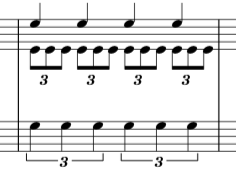
A triplet is a group of three notes played within the duration normally taken by two notes of the same value. For example, an eighth-note triplet consists of three eighth notes performed evenly in the space of two regular eighth notes. These notes are usually beamed together with a small 3 written above or below the group, and sometimes with brackets, which make the notes easier for musicians to read.

Triplets are a type of tuplet in which a beat, or a subdivision of a beat, in a simple meter is divided into three equal parts. They are often described as rhythms that can be taken from a compound meter, where beats are naturally divided into groups of three, on each main beat.
How Do We Count Triplets?
Triplets can be counted in several ways, depending on the teaching method and the musician’s preference. The most common and beginner-friendly method is:
“1-trip-let, 2-trip-let”

This approach uses numbers to represent the main beats, making it easier to stay connected to the pulse of the music. Other common methods include:
“trip-o-let”
“1 + a, 2 + a”
What are Duplets?
A duplet is a type of tuplet that divides a beat, or part of a beat-a subdivision, in a compound meter into two equal notes rather than the normal three. Duplets are indicated by placing the number 2 above or below the grouped notes.

Like triplets, duplets create a rhythmic division that differs from the natural subdivision of the time signature. In a compound meter such as 6/8, beat are normally divided into three parts. An eighth note duplet, however, consists of two eighth notes played evenly in the space normally occupied by three notes. This can make a compound measure feel more like a simple meter.
How we Count Duplets?
Duplets are commonly counted by following the smaller beat subdivisions.
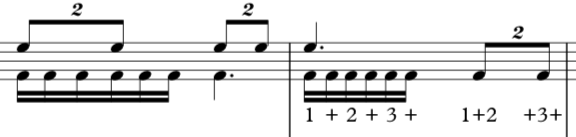
So, the first subdivision of the main beat (a dotted quarter note) consists of three eighth notes. Each of these eighth notes can than further subdivided into two sixteenth notes. We count the first note of the duplet on the first sixteenth note, while the second note of the duplet falls on the “and” of the second group of sixteenth notes.