
Accidentals in music are symbols that change the pitch of a note. When you place an accidental before a note on the staff, it either raises or lowers the pitch compared to its natural version.
Understanding the 12 Notes in an Octave
To understand accidentals better, let’s look at the piano keyboard. An octave on the piano has 12 keys. Seven of them are white – C, D, E, F, G, A, and B. These are the notes without accidentals and form the C major scale.
However, there are also five black keys. These are notes that include accidentals in music. Together, the full set of 12 notes in one octave is:
C, C♯ (D♭), D, D♯ (E♭), E, F, F♯ (G♭), G, G♯ (A♭), A, A♯ (B♭), and B.
Types of Accidentals in Music
There are five main types of accidentals in music:
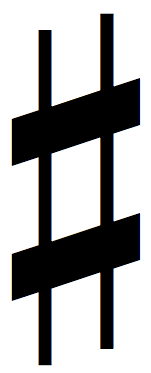
Sharp: Raises a note by one semitone. For example, F becomes F♯.
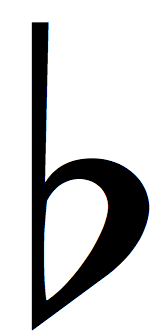
Flat: Lowers a note by one semitone. B becomes B♭.
Double Sharp: Raises a note by two semitones. A double sharp on A sounds like B.

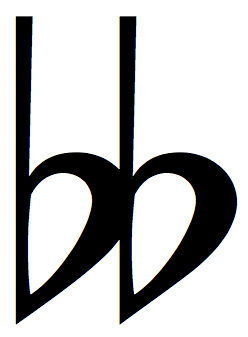
Double Flat: Lowers a note by two semitones. B double flat sounds like A.
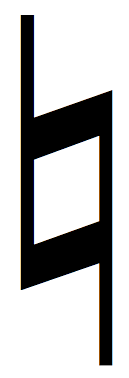
Natural: Cancels a previous sharp or flat. The note returns to its natural pitch.
How to Write Accidentals in Music
Accidentals are always written before the note on the staff. They must align with the same line or space as the note they alter.
Rules for Using Accidentals in Music
Here are a few important rules about accidentals in music:
Within One Measure: An accidental affects all the same-name notes in the measure. You don’t need to repeat the symbol.

After a Bar Line: Accidentals do not carry over to the next measure.
We mentioned earlier that, accidentals are applied only within a measure. So the bar line cancels the accidental. When you want to raise or lower the pitch again on the same note in the next measure, you must write it again.
Tied Notes: If a note is tied across measures, the accidental stays active for the tied note only.


Natural Sign: Use a natural sign to cancel a sharp or flat in the same measure.

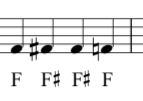
These rules help keep the music clear and readable.
Accidentals and Key Signature
In upcoming lessons, we’ll explore key signatures in detail – including how they work in major and minor keys. But for now, let’s build a solid foundation to help you understand how accidentals in music connect to key signature.
What Is a Key Signature?
A key signature is a set of sharps (♯) or flats (♭) written at the beginning of a piece of music. You’ll find it right after the clef and just before the time signature. This group of accidentals tells you which note will be sharp or flat throughout the piece – unless otherwise changed by a natural sign.
Key signatures help musicians know the key of the piece.
How to Read Key Signatures
Sharps and flats in key signatures are written on specific order, on the lines or spaces of the staff.
If you see a sharp on the top line of the treble clef (the fifth line), where F is placed. So, the sharp means every F in the piece becomes F♯.

If you see flats on the middle line and the fourth space, they represent B♭ and E♭. This tells us that every B and E in the piece should be played as flat notes – unless a natural sign appears. A natural cancels out an accidental in the key signature or earlier in the measure.